INTRODUCTION
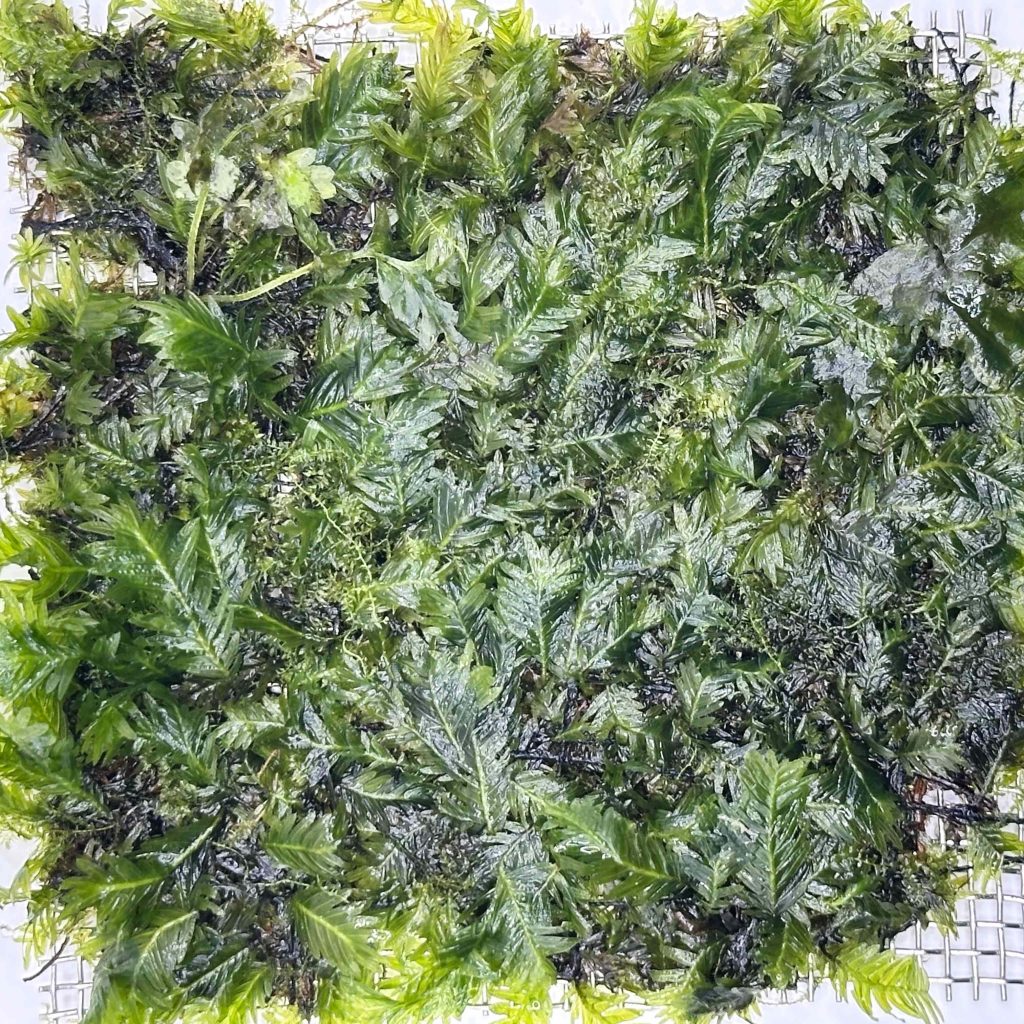
In the world of aquatic mosses, Fissidens nobilis is considered a premium, “architectural” species. Often compared to its smaller cousin, Fissidens fontanus (Phoenix Moss), the nobilis variety is significantly larger, sturdier, and more defined. It features deep forest-green fronds that resemble miniature palm leaves or prehistoric ferns.
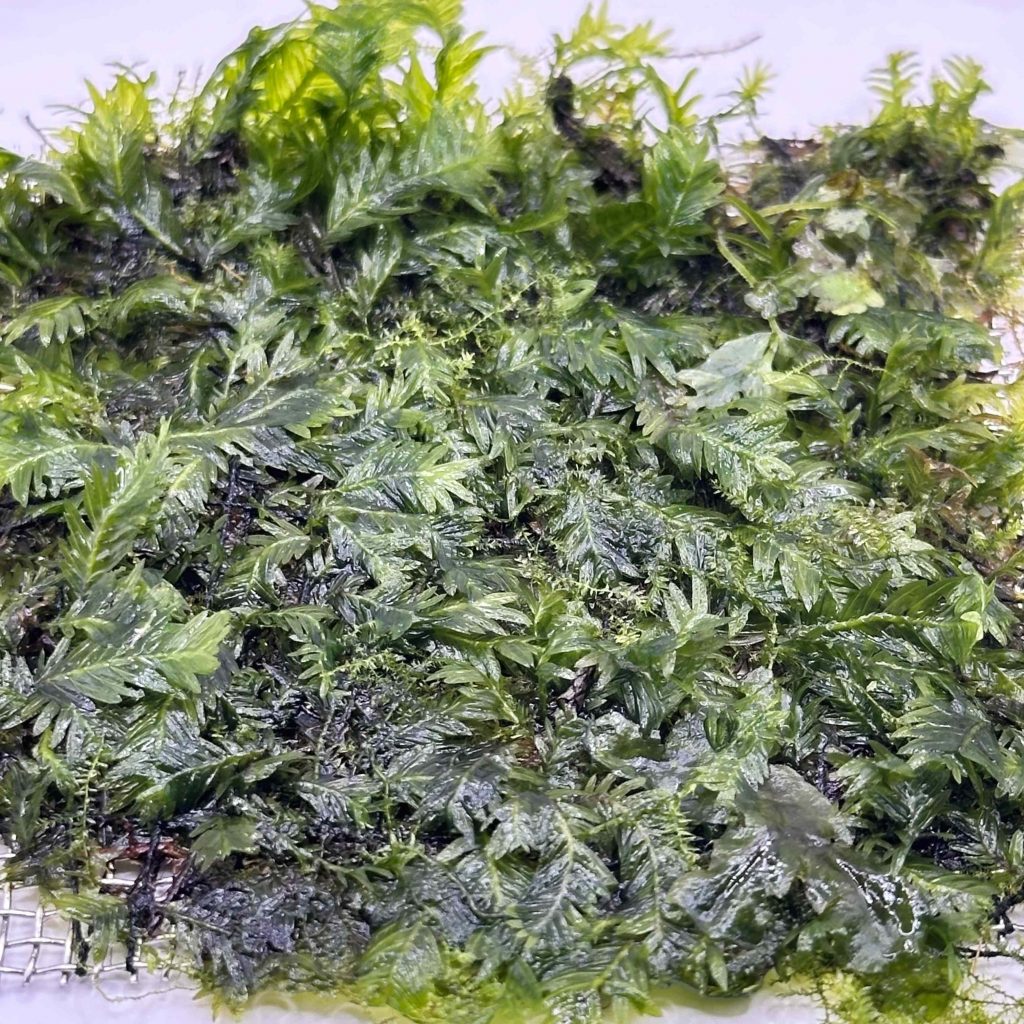
It is highly prized by aquascapers for its unique ability to grow in neat, overlapping “shingles.” Unlike common Java Moss, which can become a chaotic tangle, Fissidens nobilis maintains a structured, symmetrical growth pattern that adds an air of ancient, untouched nature to any aquarium or terrarium.
QUICK GUIDE
| Feature | Requirement / Detail |
| Difficulty | Easy to Moderate |
| Growth Rate | Very Slow |
| Placement | Foreground / Hardscape / Accent |
| Light Requirements | Low to Medium |
| Temperature | 18°C – 26°C (64°F – 79°F) |
| pH Range | 6.0 – 7.5 |
| CO2 Requirement | Optional (But significantly improves density) |
IN THE WILD
Fissidens nobilis is widely distributed across Asia, specifically in humid, tropical regions like China, Japan, and Southeast Asia.
- The Semic-Aquatic Specialist: In its natural habitat, it is often found growing on damp rocks, riverbanks, and tree roots near waterfalls. It thrives in the “splash zone,” where it remains permanently moist but is not always fully submerged.
- Cool Water Preference: While it is a tropical species, it is often found in shaded forest streams where the water remains cool and oxygen-rich.
- Anchor System: It does not have true roots; instead, it uses rhizoids to firmly anchor itself to porous surfaces like volcanic rock or decaying wood.
IN THE AQUARIUM
Fissidens nobilis is a plant for the patient hobbyist. Because it grows so slowly, it is often used as a permanent fixture in high-end scapes.
- Attachment: It should never be “planted” in the substrate. Instead, it should be tied with thread, secured with fishing line, or attached with a tiny amount of cyanoacrylate-based superglue to rocks or driftwood.
- The “Dust” Magnet: Due to its dense, feathered structure, this moss can easily trap detritus and fish waste. If left uncleaned, this organic matter can suffocate the moss and invite hair algae. Gentle siphoning or “blasting” with a turkey baster during water changes is essential.
- Cooler is Better: This moss tends to struggle in very warm water (above 27°C / 80°F). It prefers slightly cooler, stable temperatures to maintain its deep green color.
- Algae Caution: Because it is such a slow grower, it cannot “out-compete” algae. Maintaining clean water and having a solid cleanup crew (Amano shrimp are excellent for Fissidens) is highly recommended.
PROPAGATION
Propagating Fissidens nobilis is simple, though the results take time to manifest:
- Fragmentation: You can take a large clump and simply pull it apart or snip it into smaller sections with sharp scissors.
- The “Milkshake” Method: Some scapers finely chop the moss and “paint” it onto a rock using a moss-slurry (often mixed with a bit of yogurt or specialized moss gel) in a dry-start setup.
- Tie and Wait: For most, the best way is to tie small 1 cm portions onto your hardscape. Over several months, these small fragments will grow into lush, rounded cushions.
MY OBSERVATIONS
Fissidens nobilis provides a “sense of scale” that is unmatched. In a nano tank, it looks like a giant forest of ferns; in a large tank, it looks like aged moss on an ancient cliffside. It is one of the few plants that looks better the older it gets.
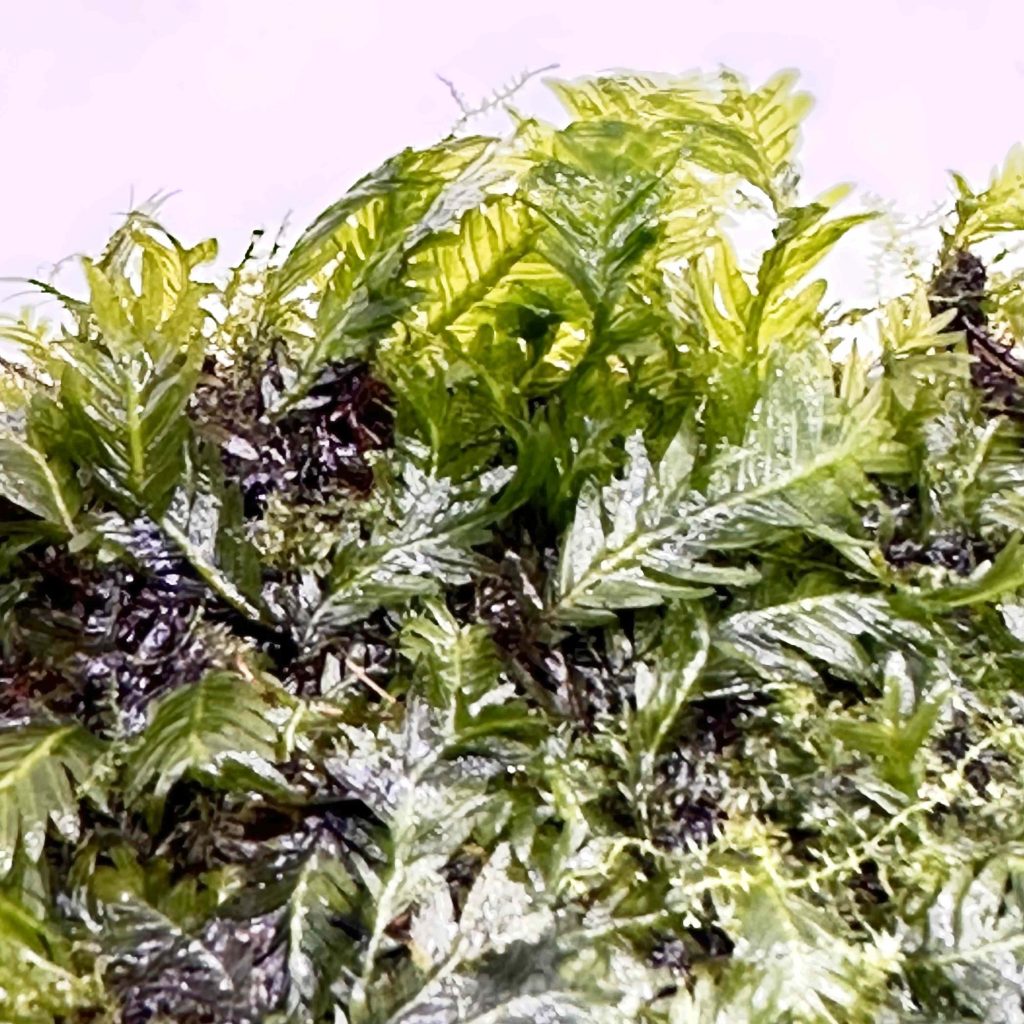
Pro-Tip: If you use CO2, you will see Fissidens nobilis “pearl” beautifully. Small bubbles of oxygen will get trapped within the feathered fronds, making the moss look like it’s covered in tiny diamonds. This is a sign that the moss is healthy and actively growing.
BUYING OPTIONS
Because Fissidens nobilis takes a very long time to grow, we offer it in a living wall format to ensure you get the density you need:
1. Living Wall Mats
The ultimate solution for those who don’t want to wait a year for a full look.
- Pre-Grown Maturity: These mats feature thousands of fronds already anchored and growing in a dense, lush carpet.
- Instant Green Wall: You can attach these mats to the back of your aquarium to create a vertical “Living Moss Wall,” or lay them across the substrate to create a soft, prehistoric-looking meadow.
- Best for: Large aquascapes and display tanks where an immediate, mature aesthetic is required.
