INTRODUCTION
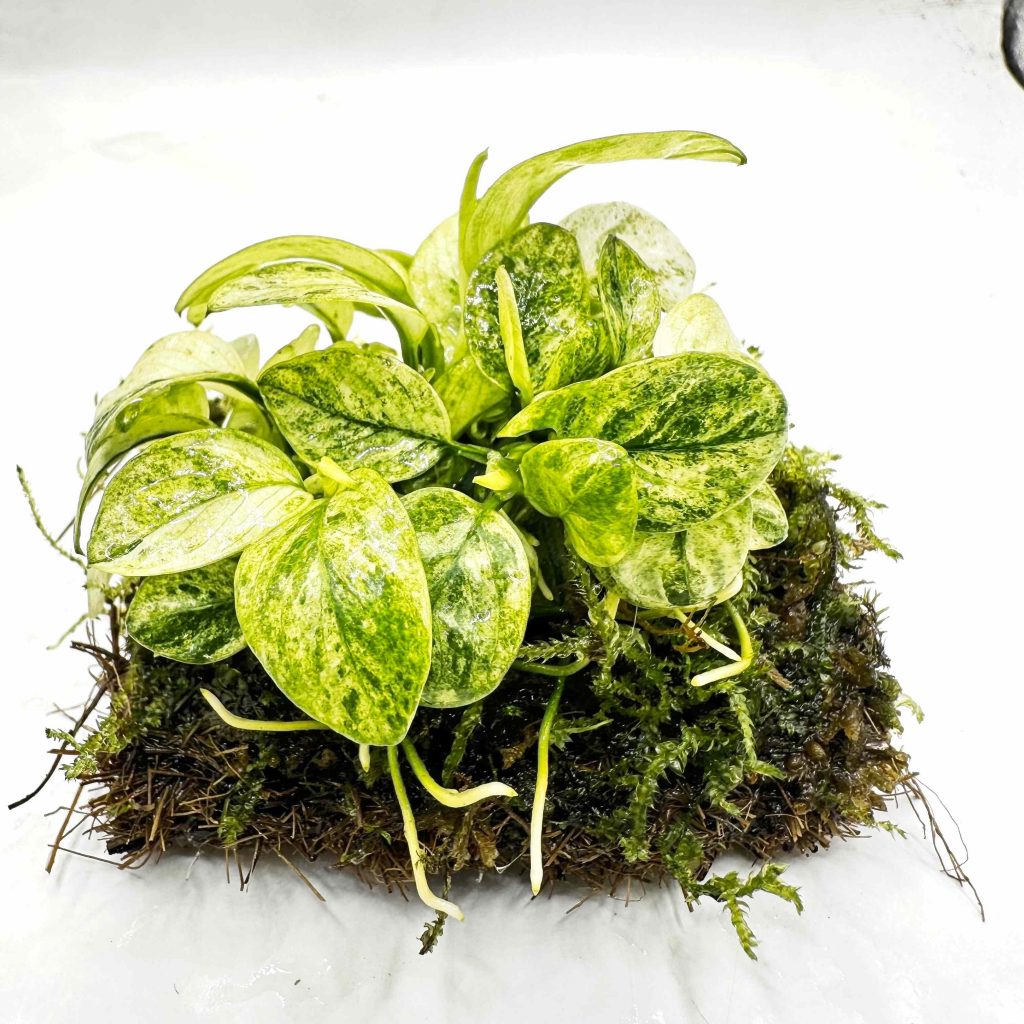
Anubias nana ‘Pinto’ is a high-fashion cultivar that has taken the aquascaping world by storm. Unlike the solid green of standard Anubias or the minty tones of ‘Ice’, ‘Pinto’ features distinct, high-contrast white and green variegation. Each leaf is like a unique thumbprint; some may be almost entirely white, while others are splashed with deep forest green.
Because of this striking pattern, ‘Pinto’ is often used as a focal point in high-end “Nature Aquarium” layouts. It is a slow-growing, premium epiphyte that offers a level of brightness and “pop” that few other low-light plants can provide.
QUICK GUIDE
| Feature | Requirement / Detail |
| Difficulty | Moderate |
| Growth Rate | Very Slow |
| Placement | Foreground / Midground (Attached to wood/rock) |
| Light Requirements | Medium |
| Temperature | 20°C – 28°C (68°F – 82°F) |
| pH Range | 6.0 – 7.5 |
| CO2 Requirement | Recommended (To maintain variegation) |
IN THE WILD
As a man-made selection, Anubias ‘Pinto’ does not exist in nature. It was developed through the careful selection of variegated mutations of the standard Anubias barteri var. nana from West Africa.
- Lab Cultivation: To maintain the distinct white patterns, these plants are often propagated in specialized nurseries. Without proper care, variegated plants can sometimes “revert” to green, but the ‘Pinto’ strain is prized for its genetic stability.
- Photosynthetic Efficiency: Because the white parts of the leaves lack chlorophyll, ‘Pinto’ grows significantly slower than its green cousins. It requires a bit more care to ensure it has enough energy to thrive.
IN THE AQUARIUM
‘Pinto’ is a masterpiece of a plant, but it requires a strategic touch to keep it looking its best.
- Rhizome Management: As with all Anubias, the horizontal rhizome must remain above the substrate. Wedging it into the gaps of dark stones (like Seiryu or Dragon Stone) creates a stunning color contrast.
- Lighting Balance: This is the most critical factor. Too little light, and the plant will grow painfully slow; too much light, and the bright white leaves will quickly become covered in Green Spot Algae. Medium, indirect light is the “sweet spot.”
- Algae Control: Because the leaves are slow-growing and light-colored, they are algae magnets. Keeping a healthy population of Otocinclus or Amano shrimp is highly recommended to keep the leaf surfaces pristine.
- Stability: Avoid sudden changes in water parameters. ‘Pinto’ prefers a mature, stable environment where the nutrient levels stay consistent.
PROPAGATION
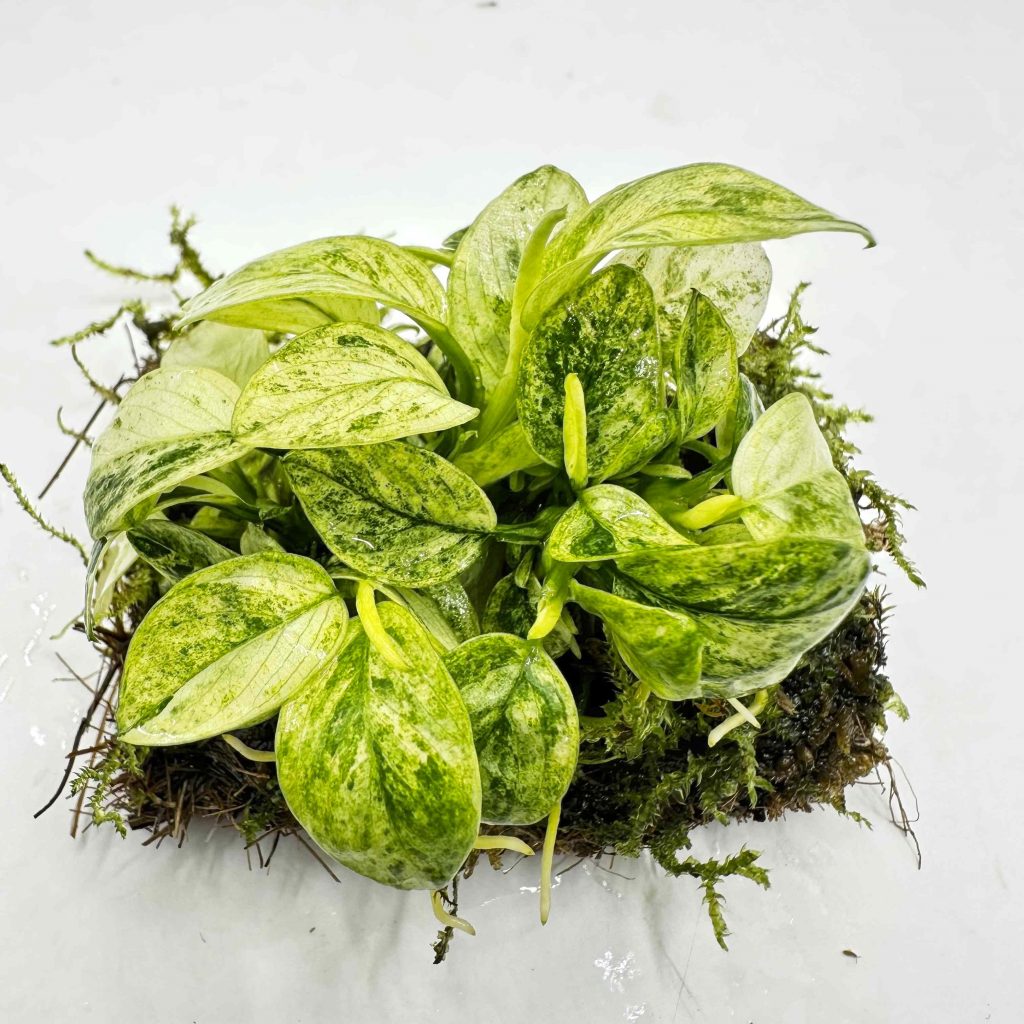
Propagating ‘Pinto’ is a test of patience, as it is one of the slowest growers in the hobby:
- Wait for Maturity: Do not attempt to divide the plant until the rhizome is at least 3–4 inches long and has multiple healthy growth points.
- The Cut: Use a sharp, sterile blade to cut the rhizome into sections.
- The 5-Leaf Rule: For ‘Pinto’, it is best to ensure each cutting has at least 5 to 6 leaves. Since the white parts don’t photosynthesize, the cutting needs more leaf surface area to survive the transition.
- Placement: Re-attach the new sections to a low-light area of the tank to allow them to recover without being blasted by light.
MY OBSERVATIONS
‘Pinto’ is the ultimate “detail” plant. If you have a dark wood-heavy scape, placing small clusters of ‘Pinto’ near the base of the wood creates an incredible “dappled sunlight” effect that draws the eye.
Pro-Tip: If you notice new leaves coming in purely green, your light might be too low. If they are coming in purely white, the plant may actually be struggling to survive due to a lack of chlorophyll. A consistent, low-dose liquid fertilizer routine helps the plant maintain that perfect 50/50 green-and-white balance.
BUYING OPTIONS
We offer the stunning Anubias nana ‘Pinto’ in two premium formats for the discerning hobbyist:
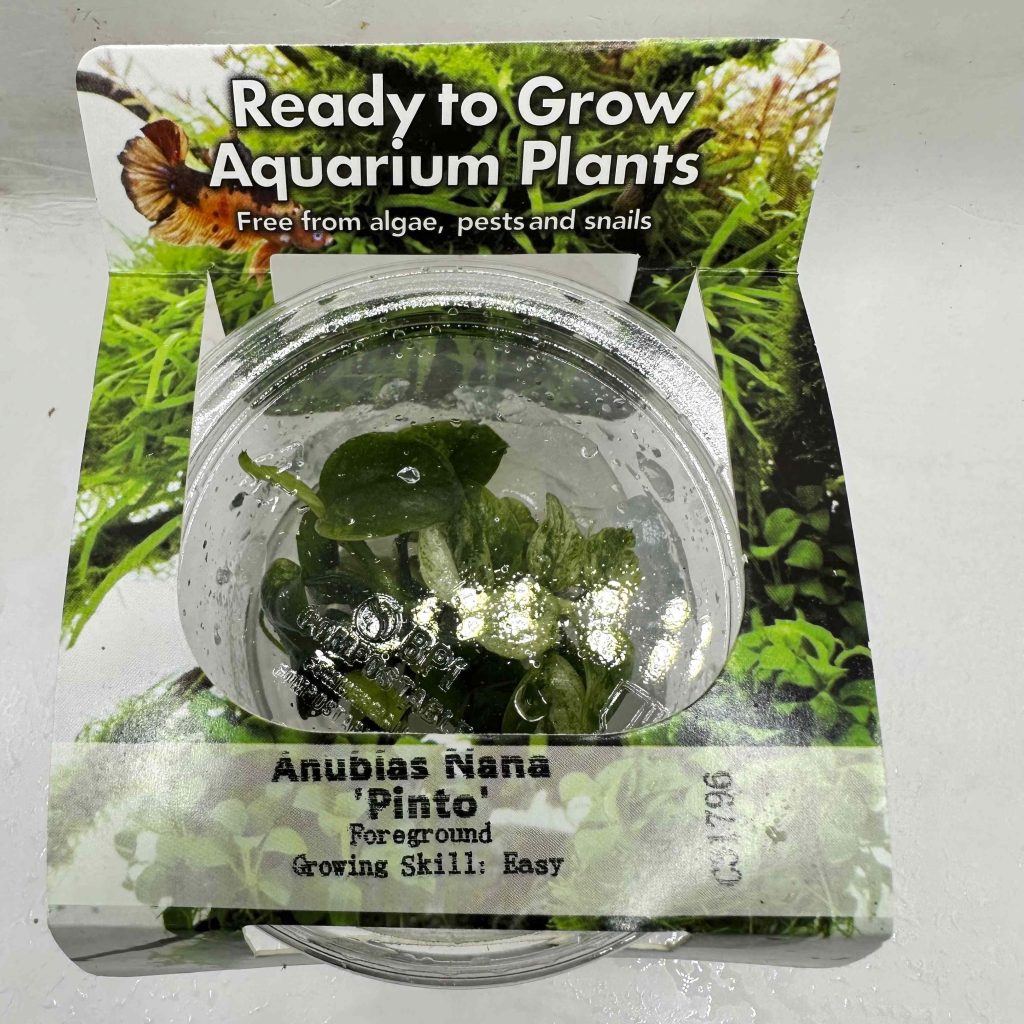
1. Tissue Culture
The most secure way to start your ‘Pinto’ collection.
- Biosecure: 100% free of snails, algae, and parasites—crucial for a plant that grows too slowly to outpace pests.
- Uniformity: Each cup contains multiple small, highly variegated plantlets ready for precision placement.
- Best for: Nano tanks, shrimp-only setups, and high-tech aquascapes.
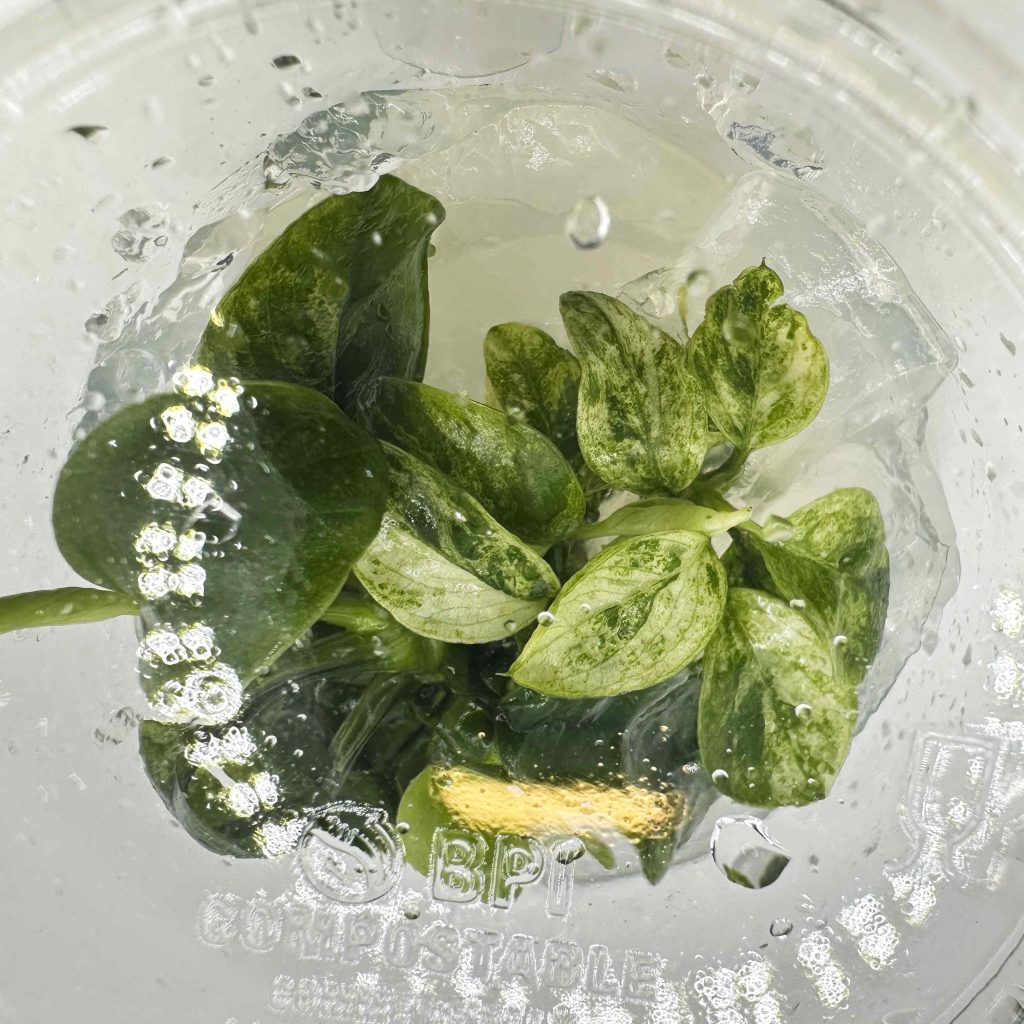
2. Living Wall Mats
For the hobbyist who wants an instant, high-end “Pinto Forest.”
- Massive Value: These mats represent months, if not years, of growth. They feature dozens of interlocking ‘Pinto’ rhizomes.
- Visual Impact: Can be used to create a striking “white-wash” across the midground or attached vertically to create a variegated living wall.
- Best for: Large display tanks and scapers who want to achieve a mature, “rare plant” look immediately.
