Ever wonder why some aquarium plants just seem to “stall” after a few months? You’ve got the light, the CO2, and the liquid ferts, but they still look… meh.
The secret isn’t usually what’s in the water—it’s what’s happening in the dirt.
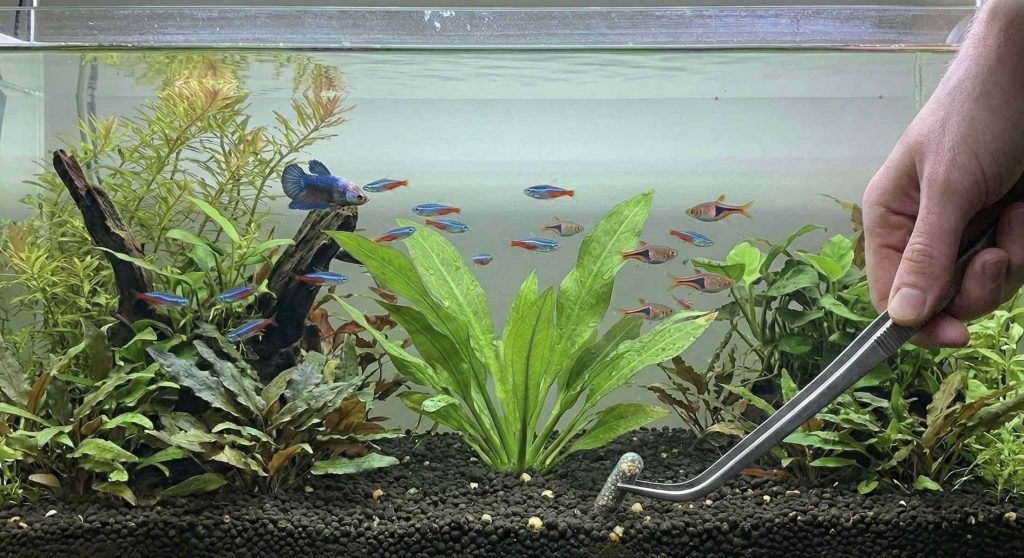
The Dynamic Duo: Fungi + Slow-Release Fuel
Most people think of root tabs as just “vitamins” for plants. But if you combine a high-quality, slow-release nutrient pill with mycorrhizal fungi, you’re actually building a tiny underground ecosystem.
Here’s the deal: standard fertilizers just dump nutrients into the soil. If the plant isn’t ready to eat, those nutrients just sit there (or worse, leak out and cause an algae breakout).
When you add mycorrhizal fungi to the mix, the fungi actually “talk” to the plant roots. They grow into the root tissue and branch out like a web, grabbing those slow-release nutrients and handing them directly to the plant. It’s like having a personal delivery service for your Amazon Swords and Crypts.
Why Your “Acid-Lovers” Will Thank You
If you’re keeping plants that thrive in soft, acidic water (like the tricky Eriocaulon or colorful Rotalas), this combo is a lifesaver. In acidic setups, certain nutrients like phosphorus can get “locked up” in the substrate. The fungi are experts at unlocking those minerals, making sure your plants stay vibrant and red instead of pale and stunted.
How to Use Them
Just tuck a tab deep into the substrate near the base of your heaviest feeders. The slow-release tech ensures the plants get fed for months, while the fungi keep the root zone healthy and oxygenated.
Stop just “feeding” your plants and start building a foundation that actually grows with them!
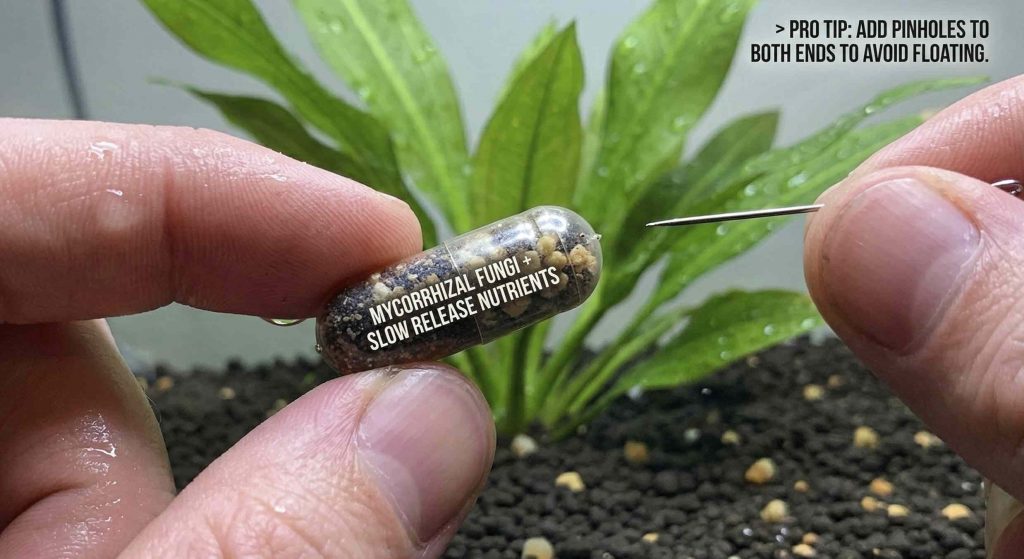
Pro Tips:
- The “Deep Freeze” Trick: If your root tabs tend to float up before you can bury them, try keeping them in the freezer for an hour before planting. It makes them easier to handle and gives you a few extra seconds before the outer shell starts to soften in the warm tank water.
- Avoid “Over-Vacuuming”: When you use fungi-based tabs, try not to deep-clean the gravel right next to the plant. You want to leave that fungal “web” intact so it can keep doing its job. Just siphoning the surface waste is plenty!
- Target the “Mother” Plant: For plants that send out runners (like Val or Sagittaria), place the tab under the original “mother” plant. The nutrients and fungi will actually travel through the runners to help the “babies” establish faster.
- Deep Placement is Key: Push the tabs at least 2–3 inches into the substrate. If they are too shallow, the nutrient prills might leak into the water column and cause a hair algae breakout.
- The “3-Month Rule”: Even though the nutrients last longer, we recommend adding a new tab every 3 months for heavy-rooting plants like large Swords to keep the fungal colony active and thriving.
- Don’t Overcrowd: Space the tabs about 4–6 inches apart. Putting them too close together can create “hot spots” of high acidity that might temporarily melt sensitive roots.
- Add Pinholes to either end to prevent floating.
