Keeping a healthy shrimp colony goes beyond just monitoring water parameters. To truly thrive, shrimp need the right combination of food sources, hiding spaces, and environmental enrichment. By focusing on these three areas, you can improve shrimp survival rates, encourage natural behaviour, and create a vibrant, active aquarium.
Natural Feeding Tips
Shrimp are grazers by nature. In the wild, they constantly pick at biofilm, algae, and microorganisms growing on plants, rocks, and wood. Providing a dedicated grazing area in your tank ensures your shrimp get the nutrition they need while reducing competition for food.
Feeding strategies include:
- Shrimp tank moss and moss pads: These surfaces develop rich biofilm that shrimp love to feed on.
- Dedicated feeding zones: Using a moss feeding station helps concentrate your shrimp’s grazing in one safe area, keeping them secure and organized during feeding times.
For a full guide on combining feeding and hiding spaces, see our article on moss feeding stations for shrimp.
Importance of Hiding Spaces
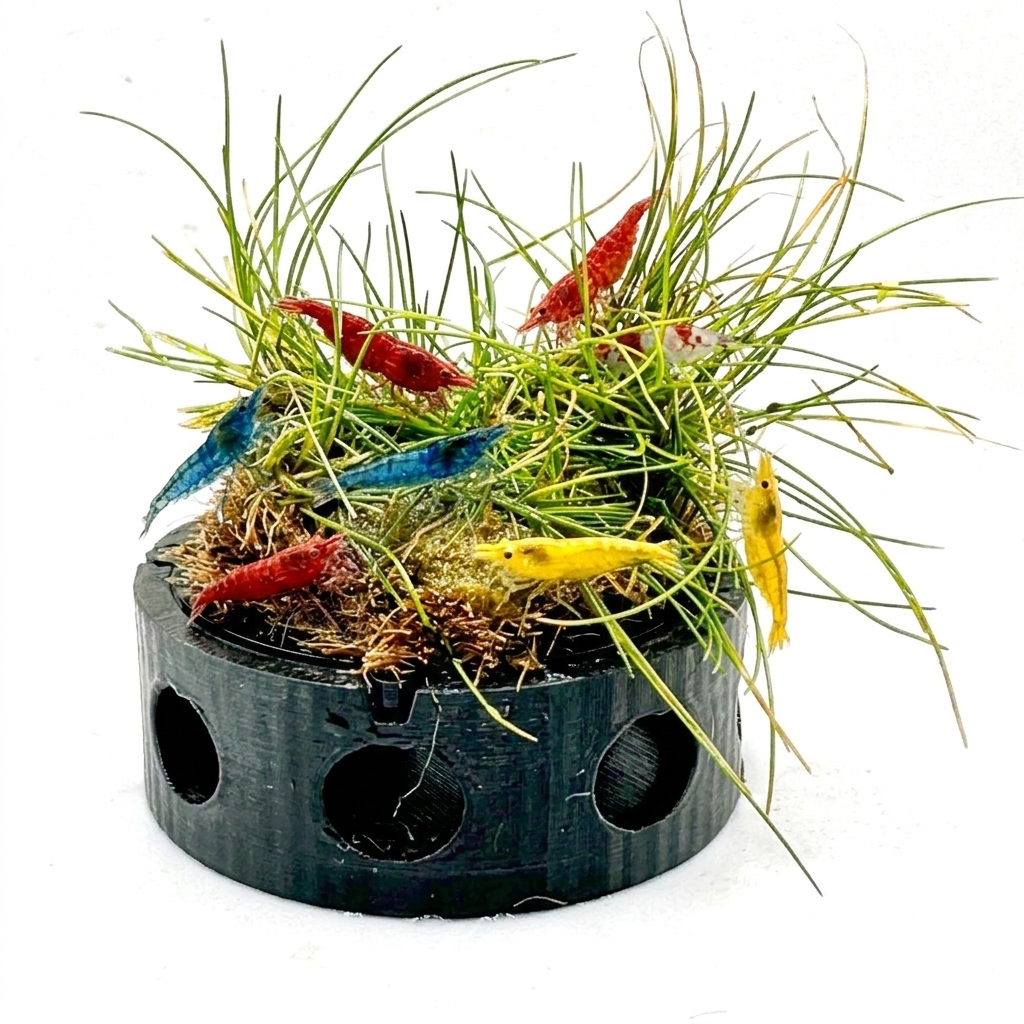
Shrimp, especially shrimplets, are vulnerable to stress and predation in community tanks. Providing plenty of hiding spots helps reduce stress and encourages natural behaviours such as grazing and exploring.
Popular hiding options include:
- Moss pads and moss feeding stations
- Small shrimp caves or shelters
- Driftwood with moss attached
- Rock formations with crevices
By offering multiple hiding options, you give shrimp the freedom to retreat when needed, which improves overall health and molting success.
Growing Your Shrimp Colony
A healthy colony is more than just keeping shrimp alive—it’s about creating conditions where they can reproduce successfully and thrive.
Tips for colony growth:
- Maintain a stress-free environment with stable water parameters
- Provide continuous grazing surfaces and microhabitats
- Encourage shrimplets to feed safely by offering moss pads or feeding stations with protective caves
- Observe your colony regularly to ensure all shrimp are active and feeding
Using these strategies together supports natural shrimp behaviour, reduces mortality, and creates a lively tank environment.
Conclusion
Caring for freshwater shrimp isn’t just about food or water—it’s about building an entire ecosystem that meets their grazing, hiding, and reproductive needs. From shrimp grazing stations to moss pads and caves, the right combination of features helps shrimp feel safe, explore, and thrive.
By providing dedicated feeding zones, secure hiding spots, and opportunities for natural grazing, you can create a robust, happy shrimp colony that’s a joy to watch.
