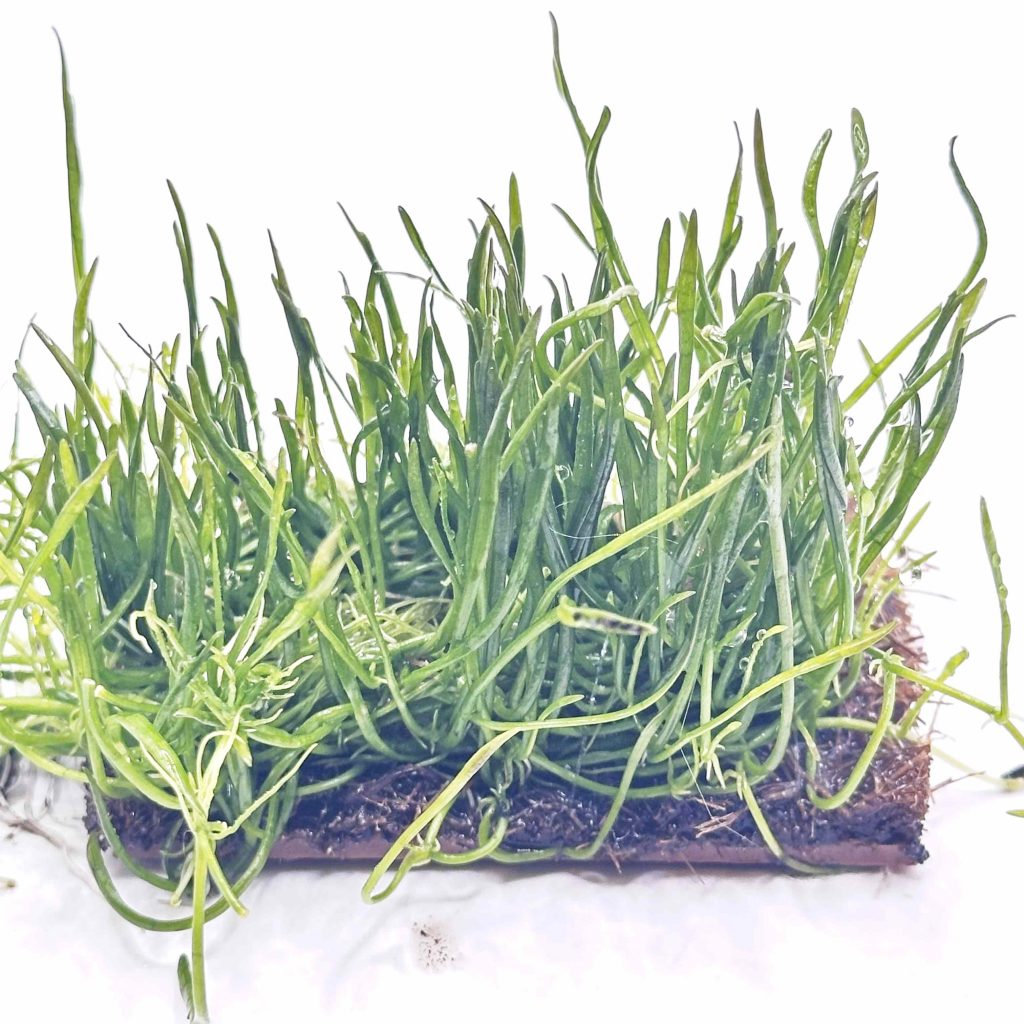
Is Micro Sword Really an Easy Carpet Plant? My Honest Take After Growing It (and Why I Sell It on Mats)
If you’ve ever searched for a “low-tech carpet plant”, chances are you’ve come across Micro Sword — also known as Lilaeopsis brasiliensis.
It’s constantly marketed as:
- Beginner-friendly
- No CO₂ required
- A great alternative to dwarf hairgrass
- An easy carpeting plant
And technically… some of that is true.
But after growing it myself, watching how other hobbyists use it, and seeing how customers struggle with it — I think there’s a much more honest conversation to have.
Let’s break it down properly.
First: It’s Not a Bad Plant
I actually really like Lilaeopsis.
It has that grassy texture people want.
It grows via runners.
It works submerged and emersed.
It tolerates a wide range of water parameters.
It can survive without CO₂.
But “survive” and “carpet beautifully” are two very different things.
And that’s where expectations start to go wrong.
The Biggest Myth: “It’s an Easy Carpet Plant”
Here’s the reality from multiple experienced aquarists:
✔ Yes — it can grow without CO₂
✔ Yes — it’s relatively hardy
❌ No — it does NOT carpet quickly in low-tech setups
Without:
- Medium to high lighting
- Nutrient-rich substrate
- And ideally CO₂
…it spreads painfully slowly.
We’re not talking weeks.
We’re talking months.
Sometimes 6+ months to see modest spread.
Sometimes a year or more to truly carpet.
That’s not failure — that’s just how this plant behaves.
Why It Disappoints So Many People
The issue isn’t that the plant is difficult.
The issue is expectation.
People buy a small pot.
Split it into tiny pieces.
Plant them across the foreground.
Wait for that lush, dense carpet look.
And then…
Nothing really happens.
It just kind of sits there.
Maybe grows taller.
Maybe spreads a little.
But not the Instagram carpet effect they expected.
Without higher light and CO₂, it tends to:
- Focus on vertical growth
- Send fewer runners
- Grow looser rather than dense
And here’s something important:
If you heavily trim it in low-tech setups, it doesn’t always respond well. It doesn’t behave like high-tech carpet plants that bounce back quickly. It can actually thin out instead of filling in.
That’s where frustration kicks in.
So Is It Easy or Not?
My honest opinion?
It depends on what you expect.
If you want:
A slow-growing, grass-textured foreground that requires minimal trimming once established…
Then yes — it’s easy.
If you want:
A fast, dense, competition-style carpet in a low-tech tank…
Then no — it’s not easy.
It becomes a moderate-level plant at that point.
Where It Actually Shines
In my experience, Lilaeopsis works brilliantly when:
- You’re patient
- You’re not in a rush
- You don’t mind gradual spread
- You use nutrient-rich substrate (or root tabs)
- You treat it as a structured grass, not a miracle carpet
It also works beautifully in Wabi-Kusa setups and emersed growth, where it develops slightly wider leaves and a different texture.
The Real Problem: The Planting Stage
Here’s what I’ve noticed after growing and selling aquatic plants:
The hardest stage of any carpet plant isn’t maintenance.
It’s establishment.
When people buy small pots or in-vitro cups, they:
- Break them into 20–40 tiny plugs
- Plant each one individually
- Hope they root
- Hope they spread
- Hope algae doesn’t take over
That fragile early stage is where most failures happen.
And that’s exactly why I now sell Lilaeopsis on pre-prepared mats.
Why I Sell Micro Sword on Mats
This comes directly from experience.
Instead of sending you:
A small pot that needs splitting, spacing, planting, and months of patience…
I grow it out first.
On a mat, it’s:
- Already rooted together
- Already interwoven
- Already spreading
- Already dense
- Already stable
So instead of planting 30 tiny fragments and waiting 6 months…
You place one mat down.
Instant structure.
Instant coverage.
Far less frustration.
And because it’s already connected via runners, it transitions into your tank far more smoothly.
You’re skipping the weakest, most failure-prone stage entirely.
My Honest Summary
Lilaeopsis brasiliensis is:
✔ Hardy
✔ Adaptable
✔ CO₂ optional
✔ Slow-growing
✔ Low maintenance once established
But it is NOT:
❌ A fast low-tech carpet
❌ A miracle foreground solution
❌ A plug-and-play dense spreader
It rewards patience.
And if you remove the delicate establishment phase — by starting with a properly grown mat — it becomes dramatically more reliable.
That’s why I prepare them that way.
Not because it’s trendy.
Not because it sounds good.
But because I’ve seen what actually works long-term.
If you’re going to carpet your tank, you might as well start with something that’s already halfway there.
