Why Pre-Rooted Mats Make Planting 10× Easier (And Why I Started Growing Them)
Let’s be honest.
Planting stem plants the “traditional” way is mildly irritating at best and tank-rage inducing at worst.
You trim them.
You grab your tweezers.
You plant them perfectly.
You sit back feeling accomplished.
Then your filter flow kicks in and half of them float to the surface like they’ve decided this isn’t the life for them.
Or you do a water change and suddenly you’re chasing stems around the tank like you’re herding aquatic sheep
Even worse, you’re corydoras catfish likes shoving his nose in where it doesn’t belong.
That’s exactly why I started growing pre-rooted plant mats.
Not because it sounds clever.
Because I got fed up.
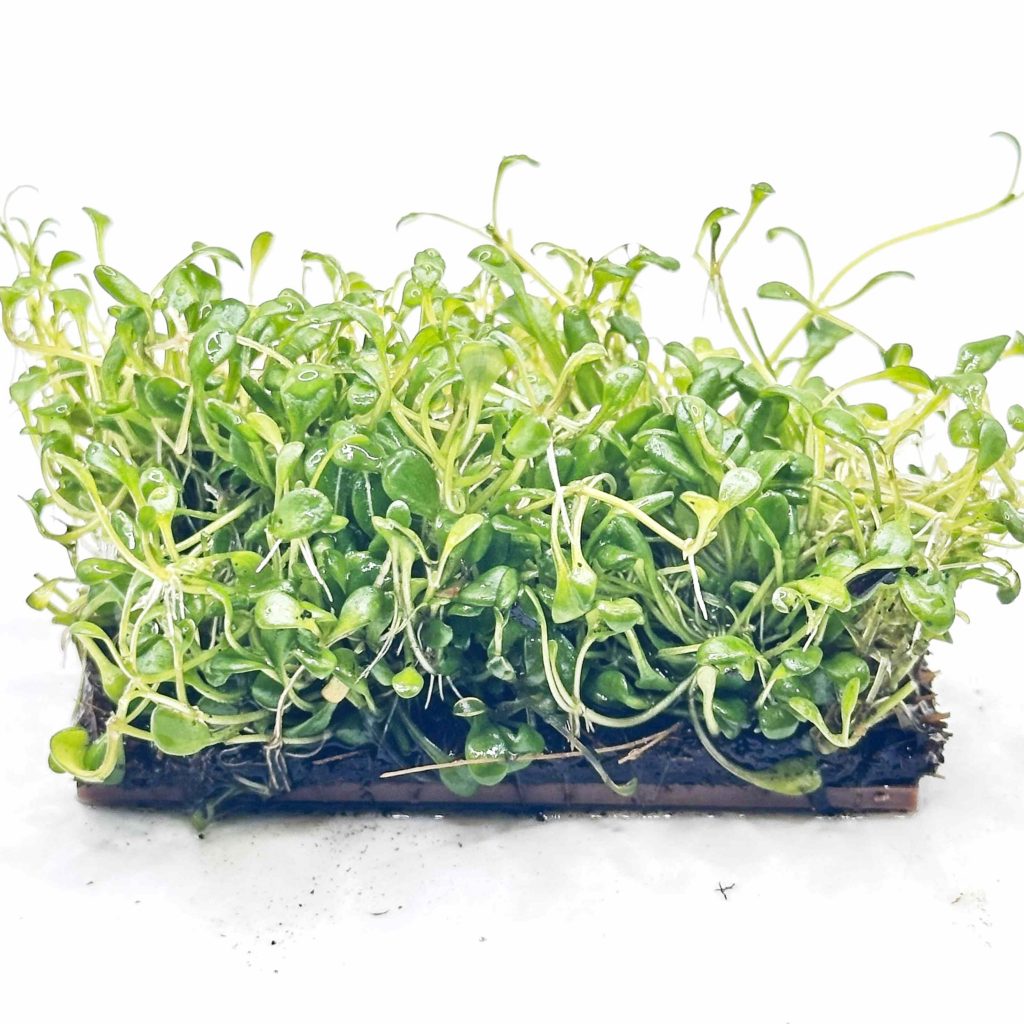
The Real Problem With Loose Stems
Most stem plants are sold as individual cuttings in pots with wool. Which is fine… until you separate them.
The moment you remove that rockwool and split the stems:
- You’re planting one thin cutting at a time.
- Each stem has minimal root mass.
- Substrate grip is weak.
- Any disturbance = uprooted plants.
It’s not that they can’t grow well.
It’s that they’re unstable in the early stage.
And that early stage is where most people lose patience.
What a Pre-Rooted Mat Actually Changes
A pre-rooted mat isn’t just “plants stuck together.”
It’s clusters that have already grown into a connected root network before they ever reach your tank.
That changes three important things:
1️⃣ Immediate Stability
Instead of 20 separate stems trying to anchor individually, you’ve got a dense root base acting like one unit.
You place it.
You press it into the substrate.
Done.
No tweezers required unless you enjoy the ritual.
2️⃣ Faster Substrate Penetration
Because the plants are already established and actively growing, roots typically penetrate into your soil within 7–14 days.
At that point, the mat stops being a “product” and starts being part of the aquascape.
You can gravel vac around it.
You can adjust flow.
It doesn’t panic and eject itself.
3️⃣ Coverage Equivalent to to at least 1 full potted plant.
Each mat provides roughly the same planting density as a standard potted plant once separated.
But without the faff.
You’re effectively installing a pre-grown section rather than constructing one stem by stem.
It’s the difference between laying turf and sowing individual blades of grass.
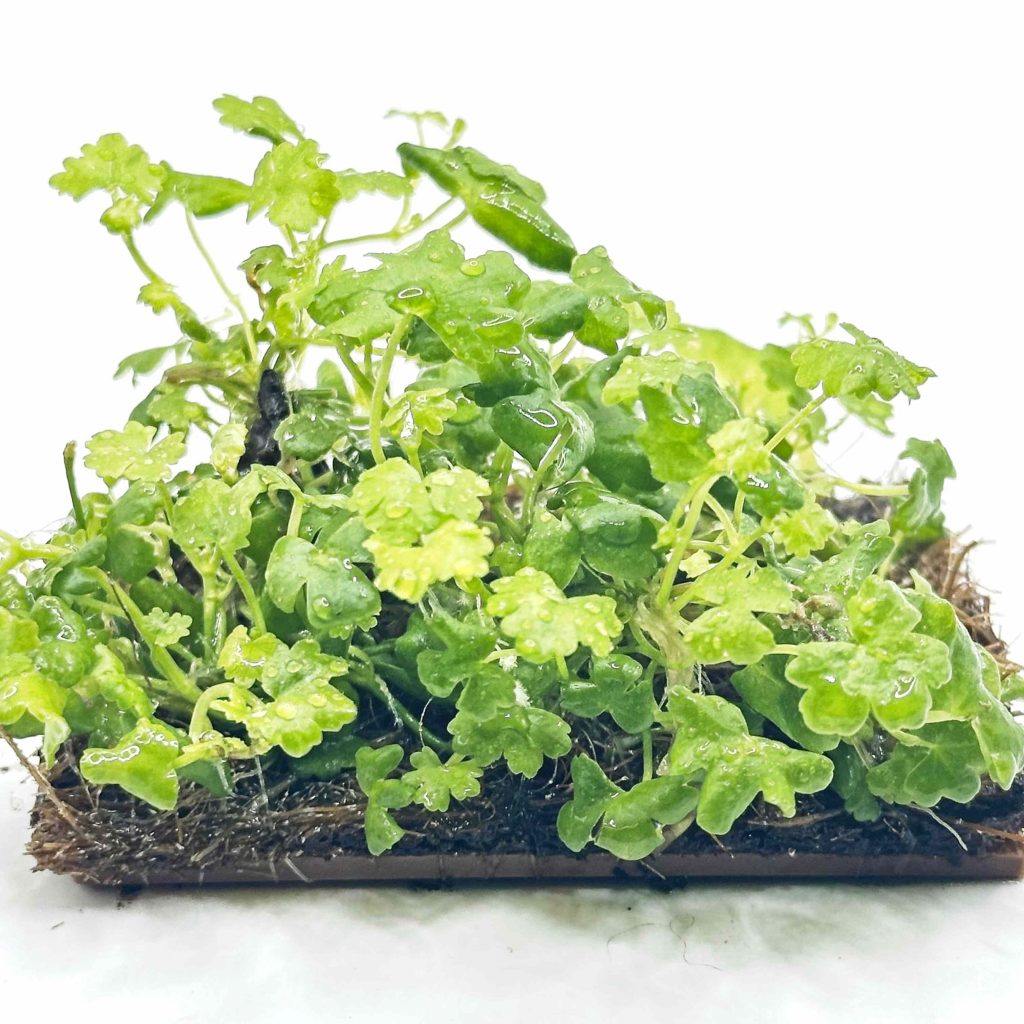
“Hand-Grown in the UK” — Why That Matters
This isn’t mass-imported tissue culture grown for transport durability.
These are grown by me, and hardened to aquarium conditions.
That means:
They’re already in growth mode when you receive them.
Which is the whole point.
The Unexpected Benefit: Maintenance
Here’s something people don’t think about.
Loose stems are easy to dislodge during cleaning.
Mats? Not so much.
Because they root as a group, they behave more like a planted carpet section than a bunch of individual cuttings.
So when you’re doing maintenance, you’re not constantly replanting your background.
Plant once.
Stay planted.
It sounds simple — but anyone who’s uprooted half their scape during a water change knows it’s not trivial.
Are Mats for Everyone?
If you love the ritual of individually spacing every stem with surgical precision, you might prefer traditional planting.
But if you:
- Want fast coverage
- Want stability from day one
- Want less maintenance frustration
- Or just don’t want to spend an hour with tweezers
Mats make life easier.
Not in a gimmicky way.
In a practical one.
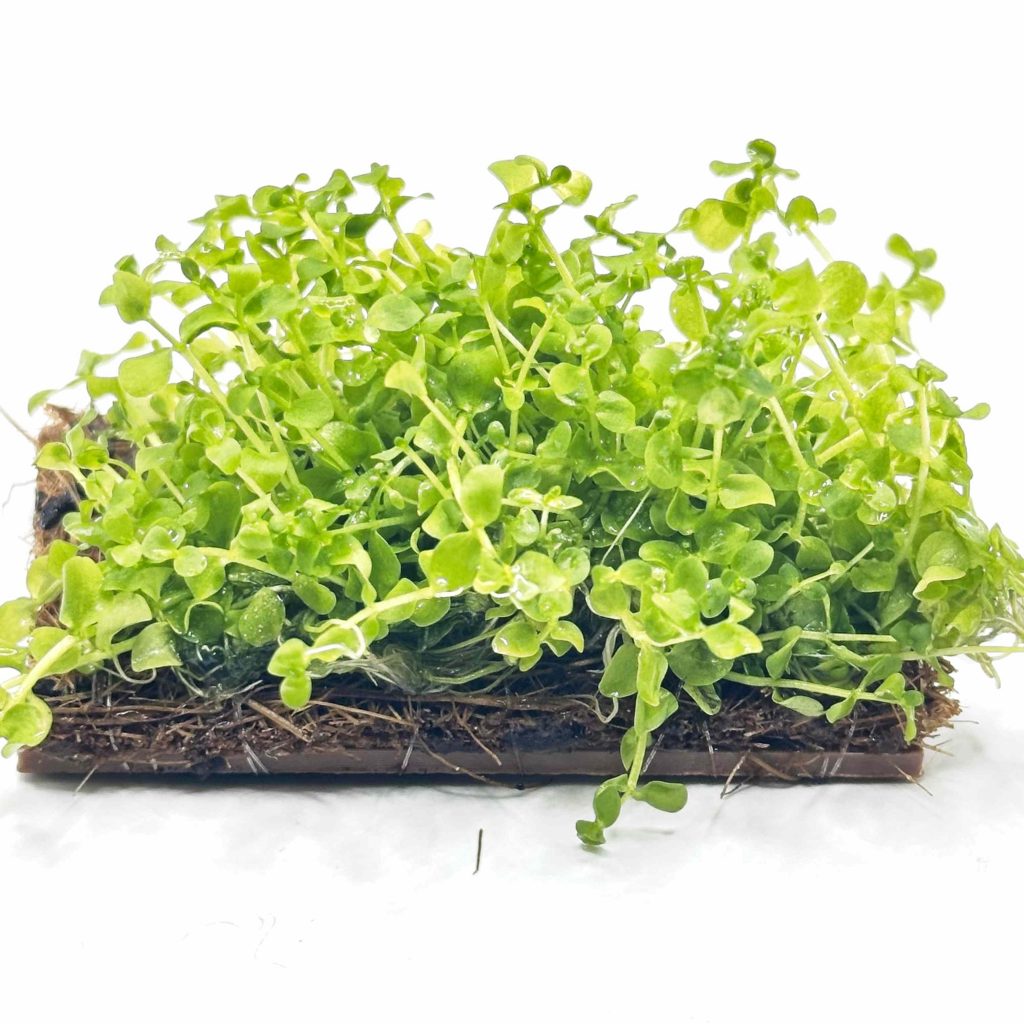
How It Works (In Real Terms)
1️⃣ Place the mat directly on your substrate
2️⃣ Press lightly so the base makes contact
3️⃣ Within 7–14 days, roots penetrate and anchor
4️⃣ Growth continues as normal — just without the floating stage
No floaters.
No replanting.
No swearing at your filter outflow.
Why I Bother Growing Them This Way
Honestly?
Because I wanted something I’d actually use in my own tanks.
Pre-rooted mats remove the most annoying stage of planting without removing the satisfaction of watching a tank fill in naturally.
They don’t shortcut growth.
They just shortcut frustration.
And in this hobby, that’s sometimes the difference between sticking with it… and tearing the whole scape apart after week three.
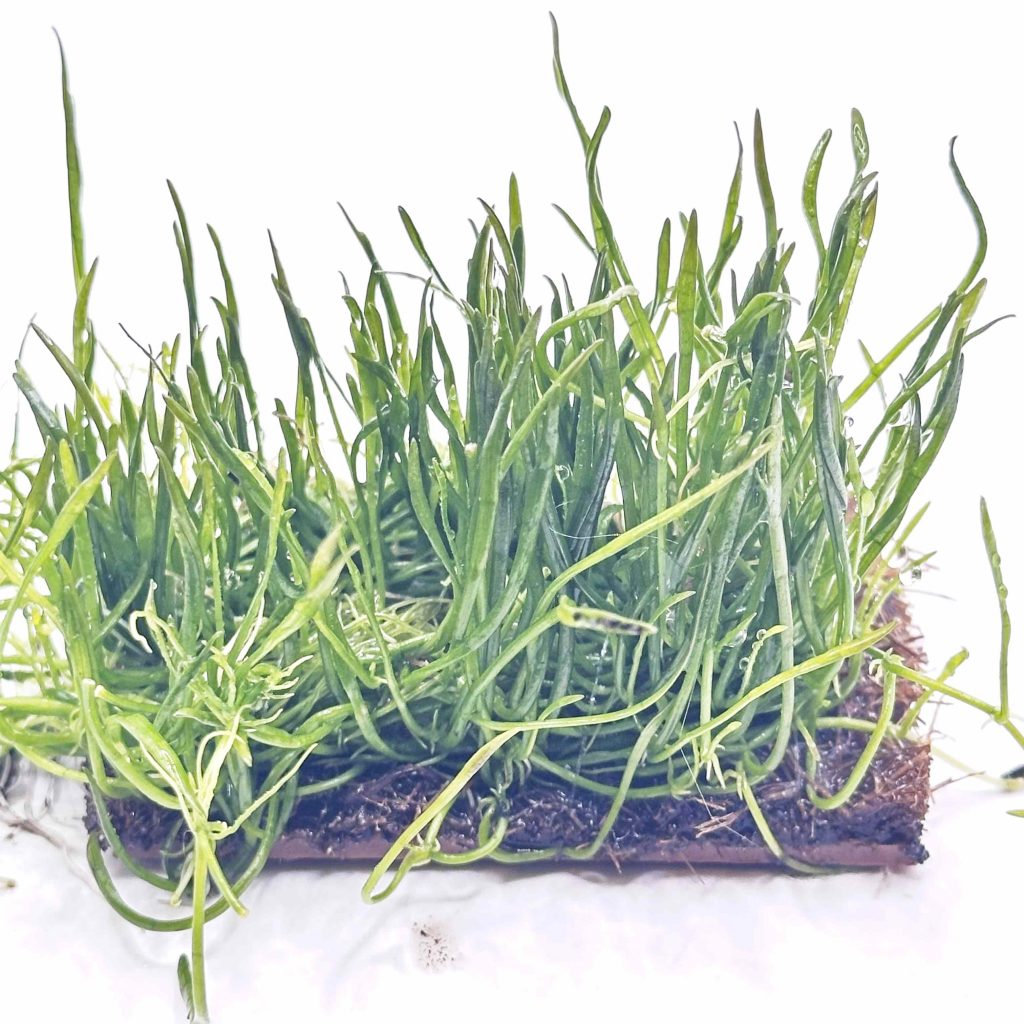
The Eureka Moment
Why I Designed the Suction Clip (Because Layouts Change)
Here’s something that doesn’t get talked about enough.
Aquascapes aren’t static.
You set it up.
You’re happy for a week.
Then a plant grows differently than expected.
Or the flow pattern changes.
Or you just decide it would look better… slightly to the left.
And suddenly that “perfectly planted” section is in the wrong place.
That’s part of the hobby.
So when I started growing pre-rooted mats, I realised something:
They solve the floating problem.
But once rooted, they’re committed.
And I didn’t want them to be permanent from day one.
That’s why I designed the suction clip option.
Not as a gimmick — but as a flexibility tool.
What the Suction Clip Actually Does
The clip allows you to:
- Attach the mat temporarily to glass, hardscape, or specific zones
- Test positioning before committing it to substrate
- Create vertical or mid-level growth areas
- Move it easily without disturbing roots
It turns the mat from a “plant it and hope” solution into something modular.
You can trial a layout.
Adjust flow response.
Experiment with depth.
Then relocate it when you’re ready.
No uprooting.
No substrate mess.
No root damage.
Why That Matters More Than People Think
Most aquascaping frustration doesn’t come from plant growth.
It comes from regret.
Regret about placement.
Regret about spacing.
Regret about committing too early.
The suction clip gives you breathing room.
You can let the plant establish, observe how it behaves in your tank’s light and flow, and then decide whether it lives there permanently.
It makes the whole system adaptable.
And honestly, adaptability is underrated in this hobby.
The Real Reason I Built It
Because I move things around.
Constantly.
If I’m testing something, adjusting a layout, or trialling a new scape idea, I don’t want to rip half the substrate up every time I change my mind.
The suction clip exists because I wanted flexibility without sacrificing stability.
Once you’re happy?
Remove the clip.
Press the mat into substrate.
Let it root fully.
Temporary control. Permanent result.
That’s the idea.
